On this page
- The Church gathered before God
- Preparation: the Proskomedia
- The Kingdom and the prayer of the people
- The entrance with the Gospel and the readings
- The Great Entrance: bringing the gifts
- Love, faith and a common confession
- The anaphora: thanksgiving and remembrance
- The invocation of the Holy Spirit
- The Lord’s Prayer and Holy Communion
- Thanksgiving and the return to daily life
The Church gathered before God
The Divine Liturgy is the common action of the Church in Christ. Clergy and faithful pray together, bringing their lives and the world before the Father in the Holy Spirit. The service has two principal movements: the proclamation of the Word and the Eucharistic offering and Communion.
The Liturgy of Saint John Chrysostom is the usual form; the Liturgy of Saint Basil is served on particular days. Their prayers and ceremonial forms developed through the Church's history. This guide follows the principal movement of the service, from the gathering and readings to the Eucharistic offering and Communion.
The Kingdom and the prayer of the people
The opening blessing names the Kingdom of the Father, Son and Holy Spirit. It gives the service its direction: communion with the life of the Trinity.
In the Great Litany, the assembly prays for peace, the Church, its ministers, the world, travellers, the sick and those in distress. The repeated response asking for mercy joins the people to each petition. The antiphons and accompanying hymns continue this gathering in praise.
The entrance with the Gospel and the readings
At the Small Entrance the Gospel Book is carried in procession. The day’s hymns and the Trisagion, the hymn to the holy God, lead towards the biblical readings. The Church’s movement is towards hearing and receiving the Word.
The apostolic reading, from Acts or an Epistle, is followed by the Gospel, with psalm verses and Alleluia. The homily explains and proclaims the Word for the life of the community. These readings invite attention and response; they form part of the worship itself.
The Great Entrance: bringing the gifts
After the readings and intercessions, the service moves towards the Eucharistic offering. During the Cherubic Hymn the prepared bread and wine are brought from the table of oblation to the altar in the Great Entrance.
The Church offers what it has received from God, together with the lives of those who bring it. The procession is therefore connected with self-offering in Christ. Its outward solemnity calls for an inward willingness to give one’s life to God.
Love, faith and a common confession
The invitation to love one another precedes the confession of the Creed. Love and shared faith belong to the communion about to be celebrated. Reconciliation is therefore relevant to preparation for the Liturgy.
The Nicene-Constantinopolitan Creed expresses the faith received at Baptism and confessed in the life of the Church. Its place here shows that the Eucharist and the Church’s teaching belong together.
The anaphora: thanksgiving and remembrance
The anaphora is the central Eucharistic prayer of offering and thanksgiving. The assembly is called to lift up its heart and give thanks to the Lord. The prayer praises God for creation and salvation, joining the worship of heaven in the hymn of His holiness.
The prayer remembers Christ's Mystical Supper, His command concerning the bread and cup, and His saving work: Cross, burial, Resurrection, Ascension and the Kingdom to come. Through the Eucharist, the Church participates in His one saving self-offering.
The invocation of the Holy Spirit
In the epiclesis, or invocation, the Church asks the Father to send the Holy Spirit upon the people and the gifts, making the offered bread and wine Christ’s Body and Blood. Communion is received as God’s action and gift.
The prayer continues within the communion of the saints and in remembrance of the living and departed. The Eucharist draws the whole Church into thanksgiving and intercession, joining each communicant to the common life of the Body of Christ.
The Lord’s Prayer and Holy Communion
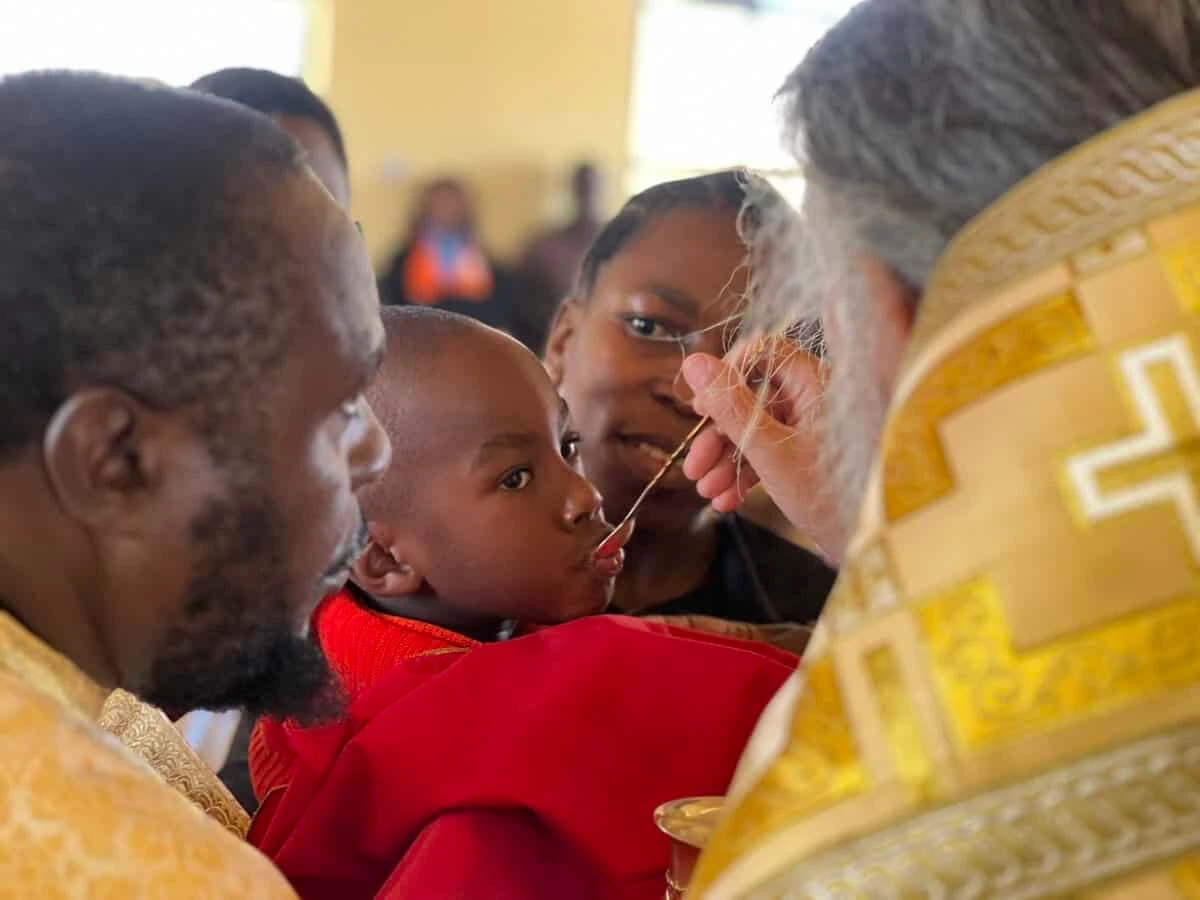
The Lord’s Prayer and the prayers for worthy participation lead towards Communion. The consecrated Lamb is elevated and broken; the clergy receive, and the faithful are invited to approach the chalice. The Church confesses that the gifts are truly Christ’s Body and Blood.
Holy Communion is received by Orthodox Christians prepared within the life and discipline of the Church. Visitors are welcome to attend and learn. Speak with the priest about preparation and the appropriate way to take part, especially when visiting or returning after an absence.
Thanksgiving and the return to daily life
After Communion the Church gives thanks and asks to remain in God’s holiness. The closing prayers and dismissal send the people out in peace, carrying the gift they have received into their relationships and responsibilities.
Blessed bread, called antidoron, may be distributed at the end; it is distinct from Holy Communion. Follow the local parish’s direction. The service’s final movement is towards witness: patience, mercy and faithfulness are part of living what has been celebrated.
Continue exploring
Read further